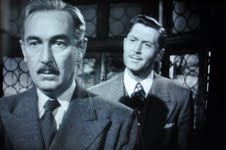
Showing posts with label PAUL LUKAS. Show all posts

Monday, July 15, 2024

THE EARLY SHOW, PT. 38

 The only thing these four movies have in common is murder. I must get out in the fresh air some more.

PICCADILLY (1929): Likely one of the last great silent movies out of the UK, Piccadilly is probably one of the handsomest as well, a big-budget drama that could pass for a major US studio release (no offense to the British film industry), and a terrific vehicle for German director E.A. DuPont as much as its star Asian-American legend Anna May Wong. From its clever opening credits (resembling bus advertisements) to its ironic closing images, Piccadilly is often startingly entertaining. 

For some sensitive souls, its story might border on -- oh heck, let's say proudly resides in -- Asian-fetishization. Which is the whole point, children. Nightclub owner Valentine Wilmot falls hard for scullery-worker-turned dancer Shosho. This puts him in dutch with Mabel Greenfield, his club's former star and longtime paramour. Shosho, having lived forever in a Limehouse flophouse, is more than willing to take advantage of Wilmot's attentions, even if it means risking the relationship with her Chinese boyfriend Jim. Both Jim and Mabel notice what's going on; sooner or later one of these saps is going to snap.

One of Piccadilly's more interesting takes is how the principal Chinese characters positively drip with contempt for their white "betters". (King Hou Chang, as Jim, puts a whole new spin on the fine art of sneering.) Say what you want about Wong's Shosho, she is 100% in charge of her relationship with Wilmot, even when such a thing was, if not verboten, at least frowned upon. (It's easy to think that top-billed Gilda Gray felt like her character Mabel while watching Wong steal the movie from under her dancing feet.)

Aside from Jameson Thomas as Wilmot, a couple of other actors are worth a mention. If you were one of those kids in the 60s who watched Mary Martin's Peter Pan, you'll likely not recognize its Captain Hook, Cyril Ritchard, in his brief role as a dancer. But you absolutely cannot miss 30-year-old Charles Laughton in his even briefer part as the grotesque, demanding guest eating dinner at the club, in what looks like the prototype for the character of Mr. Creosote in Monty Python and the Meaning of Life. Almost a century after its release, the British Film Institute's restored print of Piccadilly (and its classy new score) can easily hold the attention of a willing, receptive audience.

BONUS POINTS:  Piccadilly has a five-minute sound prologue featuring Jameson Thomas and an unidentified actor setting up the story, filmed as a sop for audiences who were already turning their back on silents. Technically crude and creaky, it's a harbinger for what movies would become for the next year or two before coming up to speed.


THE KISS BEFORE THE MIRROR (1933): Vienna: Land of sausages! Snow globes! Murdering your wife for cheating on you! Well, at least that what Walter Bernsdorf thinks. As his lawyer, Paul Held, tries to put together a defense, he discovers that his wife, Maria, is behaving identically to how Walter's wife Lucy did before her demise. If a plea of momentary insanity works in Walter's case, then it should in Paul's, yes? 

Although a Universal picture, The Kiss Before the Mirror gives off Paramount vibes with its glossy sophistication. All credit goes to its unlikely director James Whale, between his classics Frankenstein and Bride of Frankenstein. Perhaps interested in discombobulating his audience, Whale sets up the movie as a typical romantic comedy of the time, allowing viewers to live vicariously through the adulterous lovers, before Walter unexpectedly shows up to blow his wife's brains out. It's a director's way of saying, Not so cute, is it?

Paul Lukas, as Walter, is a little pathetic -- why do these "mature" guys marry younger women who are way too sexy for them? Yet he offers to plead guilty to murder rather than see Paul kill Maria. And what a pleasure that Paul is played by Frank Morgan, who, as with his appearance in Any Number Can Play, easily makes you forget his dithering comedic parts. This guy had far more range than given credit for.
The Kiss Before the Mirror's nominal star, Nancy Carroll, is Maria (another wife too young for her husband!), whose sweet-on-the-surface behavior flips when Paul rightly suspects her of adultery. But the more interesting casting choice is Walter Pidgeon in his five-minute role of Walter's wife's paramour. Pidgeon's leading man career had momentarily derailed; perhaps Whale took pity on a fellow gay man by giving him what looks like a one-day job. (Pidgeon's primping and pirouetting before his date with Lucy appears to be a deliberate directorial signal to hipper audiences of the day). A forgotten gem, The Kiss Before the Mirror is marred only by what seems to be a studio-imposed happy ending -- which is nicely undercut by a shattered mirror symbolizing Paul and Maria's very imperfect future together. At least that's how I see it.

BONUS POINTS: Michael Mark, best known as the father of the drowned little girl in Frankenstein, is a courtroom spectator. James Whale sure was good to his friends and actors. 

 WHEN STRANGERS MARRY (1944): At the time of When Strangers Marry's release, Orson Welles declared the modest B-picture better directed (by William Castle) and acted than two recently acclaimed big budget releases, Double Indemnity and Laura. And while Welles's opinion is up for debate, When Strangers Marry is nevertheless several cuts above the average B of the time.

In presenting the story of a woman's marriage to a man she's known only three days -- and soon suspects of murder -- Castle manages to evoke more unease than the story has already. Sudden noises, harsh neon lights, confusion as to whether she's seen her husband or has hallucinated him -- no scene ends without a moment of foreboding. No supporting character actor looks ordinary when weird will do. In portraying the couple, Kim Hunter and Dean Jagger manage to squeeze every drop of angst the story offers, while soaking up some more and wringing it out again. Her husband, after all, is a killer... isn't he?

Kim's ally in this nightmare is Fred Graham, played by a fellow named Bob Mitchum. It would be interesting to know what audiences at the time thought of the tall, sleepy-eyed, drawling actor, seeing that even for a B movie he was way different from others of the day. It's a good bet that co-star Neil Hamilton, a veteran of silents, probably looked upon him as other older actors did Marlon Brando some years later: Who is this guy, where is he from, and why does he talk like that?

Within a year, when everyone definitely knew who he was, Monogram re-released When Strangers Marry as Betrayed, changing Bob to Robert to reflect his "new" billing in his star-making role in The Story of GI Joe, and bumping him from third to first place in the credits. As with Humphrey Bogart "starring" in a 16 year-old movie Call it Murder originally titled Midnight, Mitchum probably had a good laugh and toasted the ticket-buyers who were fooled into watching the same movie twice. But you know what? It was worth it. When Strangers Meet may not be Double Indemnity, but it's singularly fascinating, almost entirely thanks to William Castle's unique vision. 

BONUS POINTS: The nearly dialogue-free sequence of Mildred and Paul avoiding the police by wandering through Harlem before winding up at a gin joint is brilliant, and possible only in a B movie.

GREEN FOR DANGER (1946): At a small-town hospital in wartime England, Police Inspector Cockrill investigates the mysterious death of patient Joseph Higgins and flat-out murder of Nurse Bates. Sizing up two doctors and three nurses, Cockrill notes that they're the only ones who were connected to the victims. When one of them, Nurse Freddie Linley, almost becomes the third victim, Cockrill decides he can break the case with a scheme that could leave her on death's door a second time.

The British production Green for Danger is as good an example as any of David Mamet's dictum that any movie can be improved by getting rid of the first 10 minutes. Over half an hour is needed setting up the suspects' personal, psychological and sexual conflicts that would make Fleetwood Mac envious. But when Inspector Cockrill finally takes charge, the story finally works up to a good trot.

As with all good vintage mysteries, Green for Danger's suspects appear to have a motive, or at least act that way, so that our suspicions of the guilty party shift from moment to moment. A love triangle involving Nurse Freddie and the two doctors? The anesthesiologist's previous accidental patient death becoming known? And why did the mailman insist he heard a nurse's voice somewhere recently -- like maybe on a Nazi shortwave propaganda broadcast -- just before his death? 
Yet none of this would matter without Alastair Sim's wonderful, hilarious portrayal of the inscrutable Cockrill. The inspector takes delight in needling the suspects with his keen mind, dry wit, and quiet sarcasm. With a slouched manner and cool fedora, Sims makes Cockrill the British Sam Spade, only funny. Had Green for Danger starred almost any other British actor of the '40s, it would be a pleasant if unremarkable 90 minutes. With the brilliant Alastair Sim running the show, it proves how a truly great actor can, depending on your point of view, elevate a project or fool you into thinking you're watching a movie better than it really is. 

BONUS POINTS: Despite the credits reading "Presenting Alastair Sim as Inspector Cockrill", this was his 35th movie appearance in 11 years. Either Green for Danger was intended as the first in a series with the Cockrill character, or someone at the studio was really unfamiliar with his C.V.

                                                              ***************

Friday, April 5, 2024

THE EARLY SHOW, PT. 33

The years 1931-1933 are spotlighted here, with three pre-code features and one short. You won't find these on any of those "Movies You Must See Before You Die" lists. Unless I'm compiling them.

THE VICE SQUAD (1931): While Warner Brothers was getting condemned for allegedly "glamorizing" criminals, here Paramount went in the other direction by exposing crooked cops. For two years, former upright lawyer Stephen Lucarno has been blackmailed into being a stool pigeon by Vice Squad commander Matthews. Having disappeared from his old life, Lucarno now drinks his days away while waiting to frame hookers at night. His life seems to turn around with a chance meeting with his friend Judge Tom Morrison, whose sister is Lucarno's ex-fiancĂ©e Alice. But just as a reconciliation with her seems imminent, Lucarno learns an innocent acquaintance, Madeline Hunt, has been framed on a trumped-up charge. Alice gives Lucarno a choice -- return to her and the life he once knew, or lose it all by testifying on Madeline's behalf. 

The Vice Squad plays cute by having cops referring to hookers as "vagrants" and prostitution as, you guessed it, "vagrancy", despite it never being in doubt what these dames are up to. As with a lot of pre-code pictures, The Vice Squad never really comes down hard on these women. If anything, their plight appears to be the fault of society, the Depression, and guys like the ogrish Det.-Sgt. Matthews, who roped Lucarno into being a stoolie when the latter refused to identify a sidepiece who fatally ran down a cop. Better to keep the arrest numbers up than trying to solve the murder of a colleague!

Despite Lucarno getting himself into his mess, Hungarian-born Paul Lukas (Address Unknown, Downstairs) gives the character humanity; his shame at falling so far is shown right down to the worn-out tips of his dress gloves. While only 36, Lucas passes for a middle-aged man who has thrown his life away. (Judith Wood, as Madeline, was 25 but looks two decades younger than him.) Kay Francis, not quite yet the queen of pre-codes, doesn't have a whole lot do other than moon for Lucarno, but she does it with her usual class, style, and lisp. The gaudily-named actor Rockliffe Fellowes makes you hate Matthews even more than you normally would -- here's an guy unafraid to be make a bad cop look even worse. Credit The Vice Squad for giving 1931 audiences the chance to boo the alleged good guys and sympathize with the so-called criminals for once. But did it occur to them that the woman who killed the cop in the first reel got off scot-free?

BONUS POINTS: Street names are altered just enough -- Barrow to Harrow, Christopher to Cristobal -- so it isn't necessarily the New York vice squad that's corrupt. It just... sounds like it.


FALSE FACES (1932): Dr. Silas Brenton, having been thrown out of Bronx General
Hospital for unethical behavior, sets up shop in Chicago where he becomes a plastic surgeon despite lacking the proper training. As Brenton's business and fame grow, his scruples lessen, promoting skin creams, hosting his own radio show, and starting an affair with Florence Day, the wealthy adult daughter of his latest patient, while still sleeping with his secretary Elsie. Brenton's luck runs out when his treatment of a patient's bowlegs ends in an amputation. Acting as his own attorney, Brenton's melodramatic closing arguments sway the jury in his favor -- but his unfortunate patient has the final word. 

Rat bastards weren't uncommon in pre-codes, but Silas Brenton is one for the books -- he lost his Bronx job by extorting money from poor patients at what was supposed to be a free hospital. In Chicago, he refuses payment from a famous actress, then sues her for non-payment to get his name in the papers. He promises to fix the droopy eye of Florence's mother, while knowing all along it'll never work. He refuses to answer the telegrams from the nurse he was sleeping with in the Bronx. Lowell Sherman (who also directed) plays Brenton so that the audience feels pure joy when fate finally catches up to him. He's quite good, often reminiscent of his friend (and real-life brother-in-law) John Barrymore, clearly loving this monstrous character. 

Speaking of pre-code, Sherman's direction gets the idea across of Benton's relationship with Georgia, the Bronx nurse, as he helps her with her coat while the image of his unmade bed lingers in the background. He also gets fine performances from familiar supporting actors including David Landau (70,000 Witnesses) and the doomed Peggy Shannon (Turn Back the Clock). This surprisingly good looking, low-budget release from Sono Art-World Wide (the studio with the outrageous logo) might be called False Faces but is a real treat.

BONUS POINTS: Eddie Anderson has a brief scene as a chauffeur, five years before gaining fame as Rochester on The Jack Benny Program.


FROM HELL TO HEAVEN (1933): This might as well be titled A Grand Hotel Day at the Races. A bunch of couples, singles and suckers, all betting on different horses in the same race, have good reason to hope their choices pay off. Wesley Burt needs to repay the $3,000 he embezzled from his employer. Two-timing dame Colly Tanner is $10,000 in the hole. Horse owner Pop Lockwood is down to his last bale of hay. Sam the bellhop just wants to make an extra buck or two. And a criminal is going for some extra dough before he blows town -- and perhaps for good reason, seeing that his name is Jack Ruby. Stay outta Dallas, Jack!

It would be nice if Universal Pictures, which owns the rights to Paramount's pe-1948 movies, restored the latter's obscure movies for limited-run DVDs. Instead, we have to put up with washed-out prints of From Hell to Heaven on YouTube. It's a real shame, for this is a fun little comedy-drama that never outstays its 67-minute welcome. (Some prints online are missing the first 10 or 15 minutes!). Nor does it shy away from its obvious Grand Hotel influence, seeing that Jack Oakie repeats Lewis Stone's observation that "nothing ever happens" at the resort where most of the action takes place. (Oakie even shoots a knowing glance at the camera when he repeats it at fade-out.) I'll stake my "reputation" and say out loud that From Hell to Heaven is better than Grand Hotel. It's certainly shorter.

In addition to Oakie and fellow Paramount contract player Carole Lombard (whose character is willing to sleep with her ex-bf in exchange for 10-grand), there are enough freelancers and loan-outs from other studios to fill the Kentucky Derby. Berton Churchill and Eddie Anderson (both featured in False Faces), David Manners (A Bill of Divorcement), Clarence Muse (Black Moon), Thomas E. Jackson (Broadway), and a dozen or so more, all playing to type. As each character bets on a different horse at the climax, you may find your loyalty shifting during the race (I was siding with the embezzler). There can be of course only one winner, yet all of the bettors get what's coming to them. Which, unfortunately, will probably never happen to people wanting a restoration of From Hell to Heaven. And you can bet the DVR on that.

BONUS POINTS: As someone who can neither sing, play piano, nor tap dance, I was in awe of Jack Oakie doing all three simultaneously. 

JUST AROUND THE CORNER (1934): Imagine entertainment-starved audiences r
eacting to a short starring Warren William, Dick Powell, Bette Davis, Joan Blondell, Ruth Donnelly, and Preston Foster! And with music from the still-hot 42nd Street under the credits, Just Around the Corner promised to be a slam-bang, two-reel extravaganza featuring the cream of Warner Brothers' contract players. 

The story doesn't seem to be anything to get excited about -- office drone 
Dick Powell inviting the boss Warren William and his wife Ruth Donnelly over to the house for the weekend for some trout fishing -- but isn't that true of all musicals? Sure, it's strange when Powell makes a point of pointing out the General Electric spotlights in the back yard... Ahh, but there's Bette Davis in the atypical role of happy housewife showing off her wonderful General Electric dishwasher... and General Electric refrigerator... and General Electric oven... and General Electric doorbell -- Uh, what's going on here? And how do they afford this stuff on Powell's salary? 

Glad you asked! It's easy on the General Electric payment plan! Once the dishwasher's paid off, they're getting a General Electric washing machine and iron, too! As THE END appears onscreen, that same entertainment-starved audience is probably thinking, We just paid good money to see a 20-minute commercial!

Actors knew what they were getting themselves into when they put their signature on the dotted studio line, but there was no way these folks ever expected Warner Brothers to throw them into a two-reel theatrical commercial for G.E. It's easy to picture Bette Davis, even at this early stage of her career, being one step away from shoving Jack Warner's hand down a General Electric garbage disposal. From a 21st-century perspective, Just Around the Corner is funnier than anything else Warner Brothers ever released. I mean, not only do Davis and Powell keep reminding us that G.E. appliances save time and money with the quiet repetition of a jackhammer, the refrigerator somehow saved the life of their little daughter! Buy General Electric products: a life may depend upon it.

BONUS POINTS: Joan Blondell gets off easy in her one scene, eating breakfast in bed and never once mentioning the words General Electric.

                                                 **********************

Thursday, December 16, 2021

MOVIE OF THE DAY: "DOWNSTAIRS" (1932)


Karl Schneider has been hired as the personal chauffeur of Baroness Elosie von Burgen.
A charming sociopath, Karl wastes no time in blackmailing Eloise over her extramarital affairs, seducing Sophie the middle-aged cook (strictly to get his hands on her lifesavings), and eventually making love to Anna the maid while her husband Albert the butler is away. 

Before long, the crafty chauffeur has turned husband against wife, chef against chef, butler against butler, and Baron and Baroness against everybody else. And Karl? He's ready to move on to the next family to disrupt, rob, and destroy. And, as usual, with a positive reference in hand, just to keep his mouth shut. This guy is really good at his job,

There goes the bride.
That little outline doesn't do justice to Downstairs, one of the more modern, shockingly hilarious pre-codes. From the moment Karl arrives at the von Burgen home -- on the marriage day of Albert the butler and Anna the maid -- you know he's bad news. Karl kisses the bride full on the lips, and just ramps things up from there. Breaking up marriages, stealing property, and threatening his employer come as easily to him as fixing the carburetor. You don't want to laugh, but it can't be helped. That is, if you're a cynic like me. 


If Sophie the cook believes this guy loves her, she deserves
what's coming to her.

Not only does Karl lie with the ease of a snake slithering through tall grass, he makes his victims feel guilty for doubting his character in the first place. Karl doesn't just manipulate people -- he destroys them piece by piece before rebuilding them to do as he commands. 

And you wind up feeling contemptuous of these saps for falling for his bullshit to begin with. He even manipulates the audience! So get off your high horse and admit you wish you had half this guy's nerve.


Laugh it up while you can, Albert. Your bride's going
to find out what a real man is capable of.
Karl knows how to get what he wants from everybody. He regales women with (false) tales of his childhood in order to bring out their maternal aide and shares jolly jokes over steins of beer with Albert the butler so the poor guy doesn't realize he's being cuckolded. 

And as for messing with the Baroness, well, there's nothing wrong with Karl lifting her jewelry, and gifting it to the maid -- as long as he doesn't tell the Baron about her dalliances. Anyone who thinks that the concept of the "anti-hero" was invented in the 1950s needs to give Downstairs a spin. 

"The Gilbert of Old" and
"amazing comeback" were
code for "You'll like him
this time, honest!"
As good as the supporting cast is, all credit for 
Downstairs' success goes to John Gilbert, who plays Karl as if he knew the guy personally. (He wrote the scenario, too, so maybe he didn't have to look beyond the mirror.) Gilbert is remembered now, if at all, by the false legend that his movie career was ruined by talkies because of his squeaky voice. 

The first five minutes of Downstairs disabuse you of such nonsense. Possessing an engaging charisma, his is one of the best, most natural performances of any pre-code picture. Unfortunately, a tense relationship with studio head Louis B. Mayer, coupled with audiences' changing tastes and his severe alcoholism -- Gilbert is only 35 in Downstairs, but you'd never know it -- doomed him.


And he's not even supposed to be drunk
in this scene.


His most arresting performances, in fact, happen in movies when he's supposed to be drunk. Unlike other actors, Gilbert underplays those scenes to such perfection -- the slight swaying, trying to focus his eyes, the way he tries not to sound inebriated -- that make you unsure if he's acting or really is drunk. Gilbert died at 37, so it's pretty easy to figure out.

In addition to booze, 
maybe he should have
laid off the smokes, too.
It's ironic, then, that some of Gilbert's silent movies, when he was the highest paid actor in Hollywood, might be considered old-
fashioned now, while his less successful talkies show an actor with an utterly contemporary style whose career should have flourished for decades. Downstairs could be remade today but it's doubtful any current 35 year-old actor could best John Gilbert's performance.

A couple of words about the other Downstairs actors. If you close your eyes, you'd swear Albert the butler was played by Bela Lugosi instead of Paul Lukas. And then when you open your eyes, there are times when Virginia Bruce (Anna the maid) looks just like Lisa Kudrow of Friends.  But John Gilbert is definitely the real thing.


                                                                        **************

Wednesday, February 6, 2013

MOVIE OF THE DAY: "ADDRESS UNKNOWN" (1944)


Many, perhaps most, B-movies were content to stay in their own little boxes -- quick little pictures meant to entertain with little thought as to quality. Nothing wrong with that, of course; not every movie can be The Magnificent Ambersons. Or should be, for that matter.

Then there are others, like Address Unknown, that go beyond their genre into full-fledged greatness, demanding to be recognized as such. Address Unknown fits its title -- a movie that over time, perhaps in its time, was lost in the shuffle. It is a movie about the destruction of one man's soul, where family takes second place to power, evil literally steps out of shadows, and the simple ringing of a mailman's bicycle bell creates feelings of dread. It's the best Hitchock film that Hitchcock never made.


Taking place shortly after Hitler's rise to power, Address Unknown is the story of Martin Schultz, a German immigrant living in California who returns to the Fatherland, leaving behind his business partner, Max Eisenstein. Accompanying Martin are his family and Max's daughter, Griselle. Griselle intends to study acting in Europe before returning to the USA to marry Martin's eldest son, Heinrich, who's staying in California.

A good man by nature, Martin soon comes under the spell of Baron von Friesche, a mid-level government official. Over time, Martin becomes a happy cog in the Nazi machine,  eventually cutting off all communication with his Jewish friend Max. When Martin refuses to give shelter to Griselle, who is on the run from stormtroopers, we know that he's lost any sense of humanity.


Soon, strange coded messages, with Max's return address, start arriving at Martin's door. As these letters are read by government censors, Martin comes under suspicion of treason. His wife Elsa, sickened by Martin's transformation from family man to Nazi monster, leaves Germany with their children.

The coded messages come faster, as do the threatening visits by Baron von Friesche. One night, Martin's growing paranoia finally gets the better of him -- for good reason, as he hears the grim march of stormtroopers approaching his front door.


While there is no doubt that Herbert Dalmas' adaptation of Kressman Taylor's novel deserves commendation, the power of Address Unknown ultimately comes from director William Cameron Menzies and cinematographer Rudolph Mate, two talents not generally associated with B-movies. Menzies' credits (as director and art director) include Things to Come, The Thief of Baghdad and 1933's Alice in Wonderland. Mate was no slouch in the classics department, either, having worked with, among others, Alfred Hitchcock, Ernst Lubitsch and Orson Welles. That Address Unknown was a labor of love (if that's the right phrase) is undeniable from the very beginning. The unusually tight close-ups of Martin and Max toasting a new future signal that this is will be no ordinary programmer. 

Menzies and Mate must have studied Citizen Kane long and hard, for Address Unknown visually evokes that masterpiece throughout its 75-minute running time. Still, it's vital to point out that Address Unknown stands on its own two feet -- rarely has a movie with such a short running time been so jam-packed with memorable images.

A recurring image in Address Unknown is the little Nazi who looms large simply by his surroundings: Martin in his office (left) and the government censor at a theater where Griselle is rehearsing her play (right). 


The motif is echoed in the Baron's first scene 
(left) and ironically when Max receives news of his daughter's death (right).


Yet close-ups play a vital role in creating terror, whether it be the government censor       (left) or the mob at the theater going after Griselle (right).


Movies made following World War II often portrayed the Nazi high command with cool, ironic detachment. Those released in the thick of it, however, had no problem portraying the ugly world of Nazi Germany. (That's the difference between trying to win a war and win an Oscar.) Address Unknown is no different. Again, the visuals come into play. Whether standing in the shadows or looming over Martin threateningly, Baron von Friesche is never less than a frightening presence.


Along with Baron von Friesche, the horrors of Nazi Germany are reinforced when Jewish shop-owners cower in fear as their store window is smashed (left) while "good" Germans look on in approval (right).

While Martin is the key figure in Address Unknown, it's the character of Giselle who has some of the strongest scenes -- and unwittingly sets the stage for Martin's downfall. She's been rehearsing her play when the censor (Charles Halton, in a brilliantly demonic performance -- just watch the way he spits out the word "artists") demands three Biblical passages be cut from the play: Blessed are the meek for they shall inherit the earth. Blessed are the peacemakers for they shall be called the children of God. Blessed are those who are persecuted for righteousness' sake for theirs is the kingdom of Heaven. When Giselle recites the lines on opening night, the censor stops the show and forces her to announce her real last name (Eisenstein) rather than her stage name (Stone). Cries of "Juden!" come from the audience, which rushes the stage in an attempt to kill her.

Giselle makes her escape to Martin's house. With the troops in hot pursuit, Martin turns her away, whispering, "Go away! You will destroy us all!" As Griselle's registers a sad acceptance of her fate, Martin shuts the door. A moment later, we hear a woman's scream and three gunshots. Martin stares blankly at the bloody handprint she left behind on the wall.

Helping create a sense of realism in Address Unknown is the unfamiliarity of today's audience with the cast. To put it another way, when the character of Rick is introduced in Casablanca, our immediate thought is, "Ahh! Bogie!" Paul Lukas (Martin), Morris Carnovsky (Max), K.T. Stevens (Griselle), Carl Esmond (von Friesche), on the other hand, are unknown now and, thus, are immediately accepted as their characters first, rather than as themselves. The only actor remotely recognizable is Frank Faylen (right), who was to gain lasting fame on TV as Dobie Gillis' exasperated father.


Interesting, too, is Paul Lukas. His resemblance to Walt Disney is at times startling -- all the more so since Disney was said to have been an early admirer of Hitler. Was this the moviemakers' way of sending a subtle message to otherwise uknowing audiences?

When I started writing this, I was both excited and hesitant to go into detail about the movie. Excited because it unexpectedly, wonderfully knocked me out of my seat. Hesitant, because I wanted people to notice its treasures with fresh eyes. Excitement won the day.

Address Unknown is on Amazon, presumably in the same pristine version recently run on TCM. Break out the credit card; it'll be the best eighteen bucks you've ever spent. Ripe for resdiscovery, Address Unknown is a classic hiding in plain sight and is guaranteed to stand up to repeated viewings.

And as for the meaning of its title -- well, that's all made clear in its shocking denoument...

Which you'll have to find out for yourself.


                                                                  ****************
(Note: all photos with the bluish tint were taken by me off our TV.)