The years 1931-1933 are spotlighted here, with three pre-code features and one short. You won't find these on any of those "Movies You Must See Before You Die" lists. Unless I'm compiling them.

The Vice Squad plays cute by having cops referring to hookers as "vagrants" and prostitution as, you guessed it, "vagrancy", despite it never being in doubt what these dames are up to. As with a lot of pre-code pictures, The Vice Squad never really comes down hard on these women. If anything, their plight appears to be the fault of society, the Depression, and guys like the ogrish Det.-Sgt. Matthews, who roped Lucarno into being a stoolie when the latter refused to identify a sidepiece who fatally ran down a cop. Better to keep the arrest numbers up than trying to solve the murder of a colleague!
 Hospital for unethical behavior, sets up shop in Chicago where he becomes a plastic surgeon despite lacking the proper training. As Brenton's business and fame grow, his scruples lessen, promoting skin creams, hosting his own radio show, and starting an affair with Florence Day, the wealthy adult daughter of his latest patient, while still sleeping with his secretary Elsie. Brenton's luck runs out when his treatment of a patient's bowlegs ends in an amputation. Acting as his own attorney, Brenton's melodramatic closing arguments sway the jury in his favor -- but his unfortunate patient has the final word.
 FROM HELL TO HEAVEN (1933): This might as well be titled A Grand Hotel Day at the Races. A bunch of couples, singles and suckers, all betting on different horses in the same race, have good reason to hope their choices pay off. Wesley Burt needs to repay the $3,000 he embezzled from his employer. Two-timing dame Colly Tanner is $10,000 in the hole. Horse owner Pop Lockwood is down to his last bale of hay. Sam the bellhop just wants to make an extra buck or two. And a criminal is going for some extra dough before he blows town -- and perhaps for good reason, seeing that his name is Jack Ruby. Stay outta Dallas, Jack!
 In addition to Oakie and fellow Paramount contract player Carole Lombard (whose character is willing to sleep with her ex-bf in exchange for 10-grand), there are enough freelancers and loan-outs from other studios to fill the Kentucky Derby. Berton Churchill and Eddie Anderson (both featured in False Faces), David Manners (A Bill of Divorcement), Clarence Muse (Black Moon), Thomas E. Jackson (Broadway), and a dozen or so more, all playing to type. As each character bets on a different horse at the climax, you may find your loyalty shifting during the race (I was siding with the embezzler). There can be of course only one winner, yet all of the bettors get what's coming to them. Which, unfortunately, will probably never happen to people wanting a restoration of From Hell to Heaven. And you can bet the DVR on that.
 JUST AROUND THE CORNER (1934): Imagine entertainment-starved audiences reacting to a short starring Warren William, Dick Powell, Bette Davis, Joan Blondell, Ruth Donnelly, and Preston Foster! And with music from the still-hot 42nd Street under the credits, Just Around the Corner promised to be a slam-bang, two-reel extravaganza featuring the cream of Warner Brothers' contract players.
 Actors knew what they were getting themselves into when they put their signature on the dotted studio line, but there was no way these folks ever expected Warner Brothers to throw them into a two-reel theatrical commercial for G.E. It's easy to picture Bette Davis, even at this early stage of her career, being one step away from shoving Jack Warner's hand down a General Electric garbage disposal. From a 21st-century perspective, Just Around the Corner is funnier than anything else Warner Brothers ever released. I mean, not only do Davis and Powell keep reminding us that G.E. appliances save time and money with the quiet repetition of a jackhammer, the refrigerator somehow saved the life of their little daughter! Buy General Electric products: a life may depend upon it.
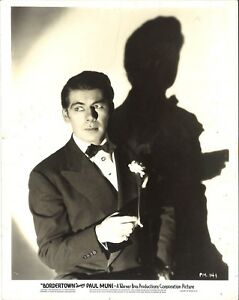
Despite Lucarno getting himself into his mess, Hungarian-born Paul Lukas  (Address Unknown, Downstairs) gives the character humanity; his shame at falling so far is shown right down to the worn-out tips of his dress gloves. While only 36, Lucas passes for a middle-aged man who has thrown his life away. (Judith Wood, as Madeline, was 25 but looks two decades younger than him.) Kay Francis, not quite yet the queen of pre-codes, doesn't have a whole lot do other than moon for Lucarno, but she does it with her usual class, style, and lisp. The gaudily-named actor Rockliffe Fellowes makes you hate Matthews even more than you normally would -- here's an guy unafraid to be make a bad cop look even worse. Credit The Vice Squad for giving 1931 audiences the chance to boo the alleged good guys and sympathize with the so-called criminals for once. But did it occur to them that the woman who killed the cop in the first reel got off scot-free?
 (Address Unknown, Downstairs) gives the character humanity; his shame at falling so far is shown right down to the worn-out tips of his dress gloves. While only 36, Lucas passes for a middle-aged man who has thrown his life away. (Judith Wood, as Madeline, was 25 but looks two decades younger than him.) Kay Francis, not quite yet the queen of pre-codes, doesn't have a whole lot do other than moon for Lucarno, but she does it with her usual class, style, and lisp. The gaudily-named actor Rockliffe Fellowes makes you hate Matthews even more than you normally would -- here's an guy unafraid to be make a bad cop look even worse. Credit The Vice Squad for giving 1931 audiences the chance to boo the alleged good guys and sympathize with the so-called criminals for once. But did it occur to them that the woman who killed the cop in the first reel got off scot-free?
BONUS POINTS: Street names are altered just enough -- Barrow to Harrow, Christopher to Cristobal -- so it isn't necessarily the New York vice squad that's corrupt. It just... sounds like it.
FALSE FACES (1932): Dr. Silas Brenton, having been thrown out of Bronx General
 Hospital for unethical behavior, sets up shop in Chicago where he becomes a plastic surgeon despite lacking the proper training. As Brenton's business and fame grow, his scruples lessen, promoting skin creams, hosting his own radio show, and starting an affair with Florence Day, the wealthy adult daughter of his latest patient, while still sleeping with his secretary Elsie. Brenton's luck runs out when his treatment of a patient's bowlegs ends in an amputation. Acting as his own attorney, Brenton's melodramatic closing arguments sway the jury in his favor -- but his unfortunate patient has the final word.
 Rat bastards weren't uncommon in pre-codes, but Silas Brenton is one for the books -- he lost his Bronx job by extorting money from poor patients at what was supposed to be a free hospital. In Chicago, he refuses payment from a famous actress, then sues her for non-payment to get his name in the papers. He promises to fix the droopy eye of Florence's mother, while knowing all along it'll never work. He refuses to answer the telegrams from the nurse he was sleeping with in the Bronx. Lowell Sherman (who also directed) plays Brenton so that the audience feels pure joy when fate finally catches up to him. He's quite good, often reminiscent of his friend (and real-life brother-in-law) John Barrymore, clearly loving this monstrous character.
Speaking of pre-code, Sherman's direction gets the idea across of Benton's relationship with Georgia, the Bronx nurse, as he helps her with her coat while the image of his unmade bed lingers in the background. He also gets fine performances from familiar supporting actors including David Landau (70,000 Witnesses) and the doomed Peggy Shannon (Turn Back the Clock). This surprisingly good looking, low-budget release from Sono Art-World Wide (the studio with the outrageous logo) might be called False Faces but is a real treat.
 gets the idea across of Benton's relationship with Georgia, the Bronx nurse, as he helps her with her coat while the image of his unmade bed lingers in the background. He also gets fine performances from familiar supporting actors including David Landau (70,000 Witnesses) and the doomed Peggy Shannon (Turn Back the Clock). This surprisingly good looking, low-budget release from Sono Art-World Wide (the studio with the outrageous logo) might be called False Faces but is a real treat.
BONUS POINTS: Eddie Anderson has a brief scene as a chauffeur, five years before gaining fame as Rochester on The Jack Benny Program.

It would be nice if Universal Pictures, which owns the rights to Paramount's pe-1948 movies, restored the latter's obscure movies for limited-run DVDs. Instead, we have to put up with washed-out prints of From Hell to Heaven on YouTube. It's a real shame, for this is a fun little comedy-drama that never outstays its 67-minute welcome. (Some prints online are missing the first 10 or 15 minutes!). Nor does it shy away from its obvious Grand Hotel influence, seeing that Jack Oakie repeats Lewis Stone's observation that "nothing ever happens" at the resort where most of the action takes place. (Oakie even shoots a knowing glance at the camera when he repeats it at fade-out.) I'll stake my "reputation" and say out loud that From Hell to Heaven is better than Grand Hotel. It's certainly shorter.

BONUS POINTS: As someone who can neither sing, play piano, nor tap dance, I was in awe of Jack Oakie doing all three simultaneously.

The story doesn't seem to be anything to get excited about -- office drone
Dick Powell inviting the boss Warren William and his wife Ruth Donnelly over to the house for the weekend for some trout fishing -- but isn't that true of all musicals? Sure, it's strange when Powell makes a point of pointing out the General Electric spotlights in the back yard... Ahh, but there's Bette Davis in the atypical role of happy housewife showing off her wonderful General Electric dishwasher... and General Electric refrigerator... and General Electric oven... and General Electric doorbell -- Uh, what's going on here? And how do they afford this stuff on Powell's salary?
Glad you asked! It's easy on the General Electric payment plan! Once the dishwasher's paid off, they're getting a General Electric washing machine and iron, too! As THE END appears onscreen, that same entertainment-starved audience is probably thinking, We just paid good money to see a 20-minute commercial!

BONUS POINTS: Joan Blondell gets off easy in her one scene, eating breakfast in bed and never once mentioning the words General Electric.
**********************